 English
 Chinese (Traditional)
 French
 German
 Hindi
Hindi Italian
 Japanese
 Spanish
 Vietnamese
All Products
Triplett offers a range of NIST Traceable Anemometers for accurate air velocity, airflow, and wind speed measurements in HVAC, industrial, environmental, and facility maintenance applications. Each anemometer NIST model includes calibration documentation to support reliable measurements, quality assurance, and routine airflow verification. Browse our collection of professional anemometers for dependable performance in testing, balancing, commissioning, and environmental monitoring.


The Triplett AM500 Hotwire Anemometer uses a strong and precise airflow and temperature sensor to provide very accurate readings. The compact telec...
View full details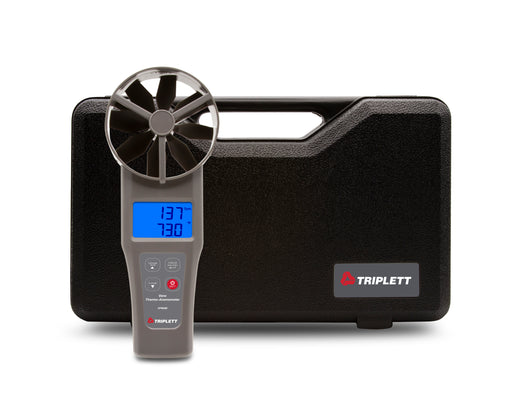
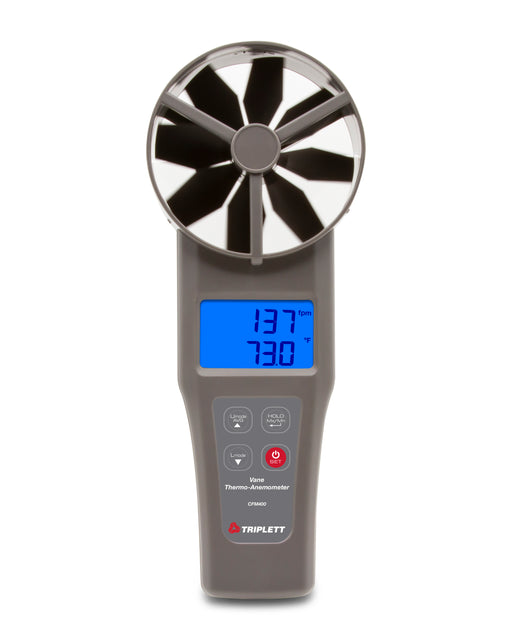
The Triplett Model CFM400 4" (100mm) Large Vane CFM/CMM Thermo-Anemometer measures Air Velocity up to 5900ft/min (30m/s), Air Flow (Volume) to 9999...
View full details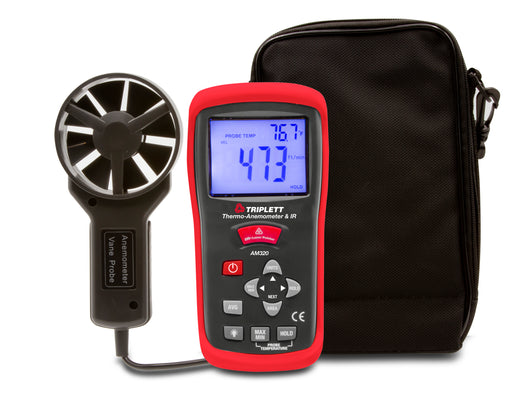
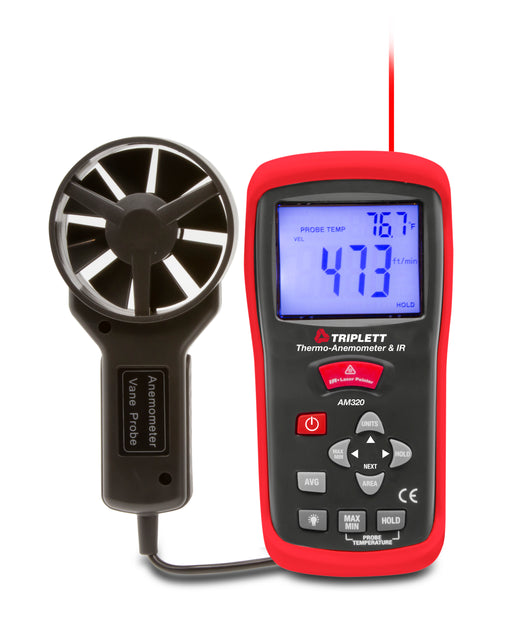
The Triplett Model AM320 Thermo-Anemometer + IR measures Air Velocity up to 5906ft/min (30m/s), Air Flow (Volume) to 999,999 CFM/CMM, Air Temperatu...
View full details

The Triplett Model CFM400 4" (100mm) Large Vane CFM/CMM Thermo-Anemometer measures Air Velocity up to 5900ft/min (30m/s), Air Flow (Volume) to 9999...
View full details

The Triplett Model AM200 Pocket Thermo-Anemometer measures Air Velocity up to 5500ft/min (28m/s), Air Temperature 122°F/50°C), and Windchill for us...
View full detailsKnow More About NIST Traceable Anemometers
NIST Traceable Anemometers provide confidence in airflow and air velocity measurements by using calibration standards linked to NIST.
They are important for applications where accurate airflow data affects system performance, energy efficiency, environmental conditions, or quality control. These instruments are commonly used by HVAC technicians, facility managers, engineers, and industrial professionals.
A NIST Traceable Anemometer can measure different airflow and environmental parameters depending on the model.
Common measurements include:
These measurements support HVAC testing, ventilation analysis, environmental monitoring, and industrial inspections.
NIST Traceable Anemometers are widely used in HVAC installation, testing, and maintenance to verify airflow performance.
Professionals use them to:
Accurate airflow measurements help improve HVAC efficiency and system performance.
A NIST Traceable Anemometer is an airflow measurement instrument that includes documented calibration traceability, while a standard HVAC airflow meter may not include this level of calibration documentation.
For professional applications requiring verified measurements, a NIST Traceable Anemometer provides additional confidence in measurement accuracy and recordkeeping.
NIST Traceable Anemometers are used across industries where airflow measurement and environmental monitoring are important.
Common industries include:
These instruments help maintain controlled environments and verify system performance.
When selecting a professional anemometer, consider:
The right features depend on the application and testing environment.
Calibration verifies that an anemometer provides measurements within expected accuracy limits when compared with recognized reference standards.
A calibrated anemometer helps professionals:
Documented calibration is especially valuable for HVAC testing and industrial applications.
Yes. NIST Traceable Anemometers support preventive maintenance by helping technicians monitor airflow performance and identify potential system issues.
Regular airflow measurements can help detect:
Consistent monitoring helps improve equipment reliability and reduce unexpected downtime.