 English
 Chinese (Traditional)
 French
 German
 Hindi
Hindi Italian
 Japanese
 Spanish
 Vietnamese
All Products
Accurate noise measurement is essential for maintaining safe and compliant work environments. Triplett's collection of NIST certified sound meters provides dependable performance for occupational safety, environmental monitoring, manufacturing, and facility management. From portable sound level meters to advanced data-logging instruments, every NIST certified decibel meter is designed to deliver reliable measurements backed by documented calibration for professional testing applications.
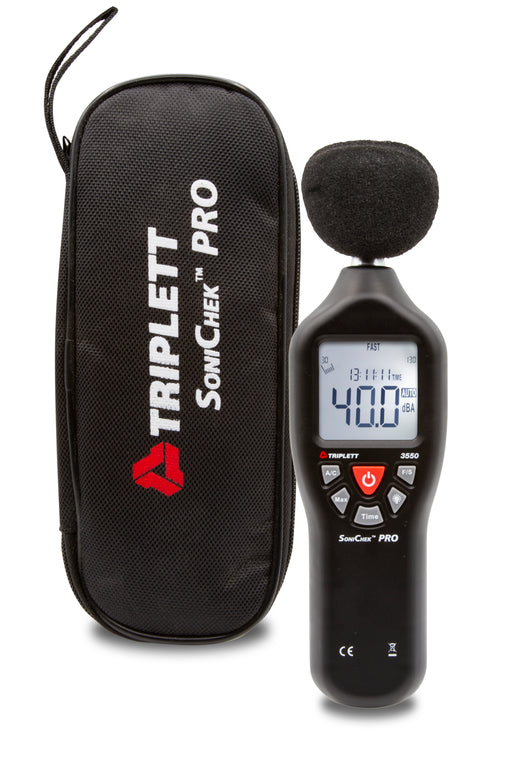
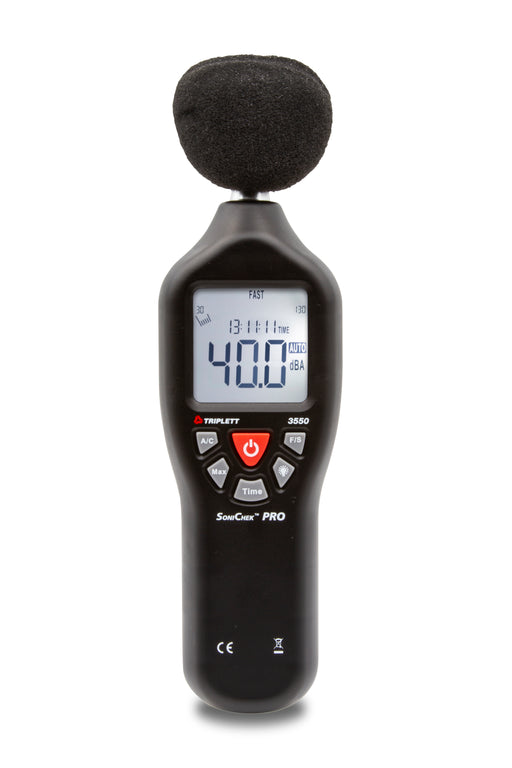
The Triplett 3550 SoniChek PRO Professional Sound Level Meter is a professional sound level meter designed to be used in industrial applications wh...
View full details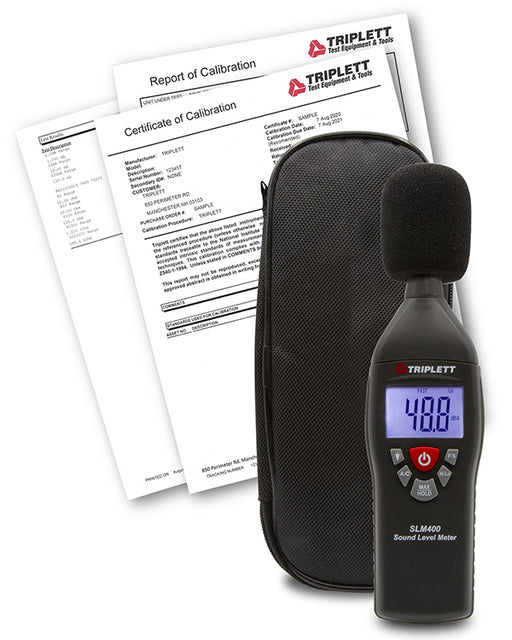
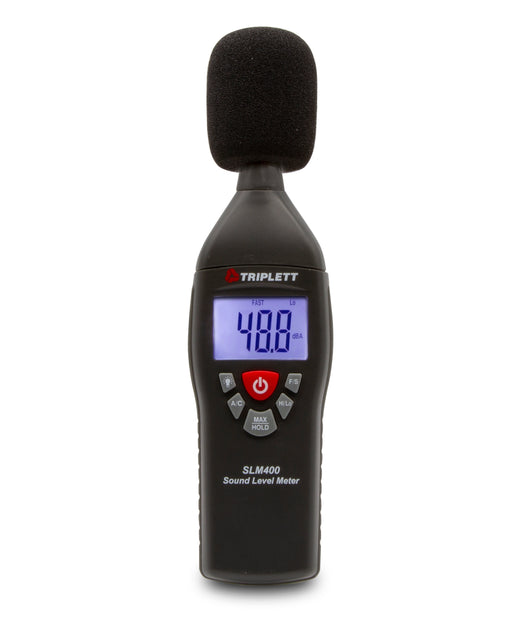
The Triplett SLM400 Sound Level Meter can be used to test and verify sound levels for worker safety (OSHA), community noise ordinances, night clubs...
View full details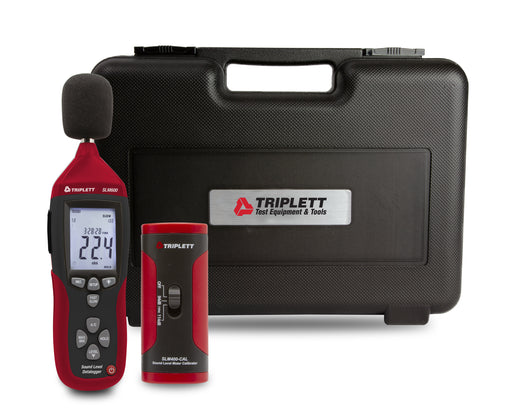
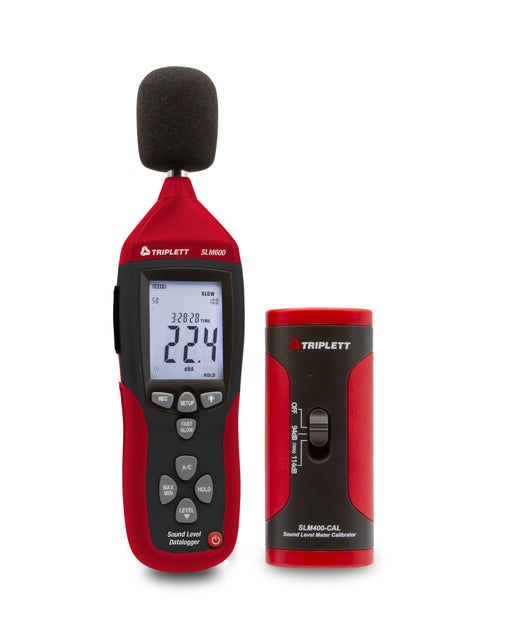
The Triplett SLM600-KIT Sound Level Meter/Datalogger with Calibrator Kit can be used to test and verify sound levels for worker safety (OSHA), comm...
View full details

Know More About NIST Traceable Sound Meters
A NIST Traceable Sound Meter is a sound level meter that has been calibrated using reference standards with documented traceability to the National Institute of Standards and Technology (NIST). This traceability establishes an unbroken chain of calibration records, helping ensure that noise measurements are accurate, repeatable, and reliable. These instruments are commonly used in workplace noise assessments, environmental monitoring, manufacturing, construction, and industrial maintenance where dependable sound measurements are important.
The terms NIST Traceable Sound Meter and NIST certified sound meter are often used interchangeably, but they are not technically the same. NIST does not certify individual sound meters. Instead, a sound meter is calibrated by a qualified laboratory using standards that are traceable to NIST.
A NIST traceable instrument includes documentation showing the calibration results and traceability information. While "NIST certified sound meter" is a common search term, "NIST traceable sound meter" is the more accurate industry description.
A NIST Traceable Sound Meter provides greater confidence in recorded noise measurements by supporting consistent and documented calibration practices. These instruments are ideal for applications where accurate sound level data is needed for inspections, reporting, workplace safety programs, or equipment evaluations.
Benefits include:
Yes, most NIST Traceable Sound Meters are supplied with a calibration certificate issued by the calibration laboratory. This certificate documents that the instrument has been calibrated using standards traceable to NIST and provides information that supports quality assurance and equipment verification.
A calibration certificate typically includes:
NIST Traceable Sound Meters are used across industries where accurate noise measurement supports workplace safety, equipment maintenance, environmental monitoring, or quality assurance.
Common industries include:
These instruments help professionals measure and document sound levels for inspections, troubleshooting, and ongoing monitoring programs.
Recalibration intervals depend on the frequency of use, operating environment, manufacturer recommendations, and your organization's quality procedures. Many organizations schedule annual recalibration, while applications requiring a high level of measurement confidence may require more frequent calibration.
Routine recalibration helps maintain measurement accuracy and ensures the sound meter continues to deliver reliable results throughout its service life.
Yes. A NIST Traceable Sound Meter can support workplace noise monitoring programs by providing reliable sound level measurements backed by documented calibration. Accurate noise data helps organizations evaluate workplace conditions, identify areas with elevated noise levels, and maintain consistent measurement records.
While a traceable sound meter is an important tool for workplace assessments, organizations should also follow applicable local regulations, industry standards, and occupational safety requirements when evaluating noise exposure.
The easiest way to verify traceability is to review the calibration certificate supplied with the instrument. The documentation should indicate that the calibration was performed using standards traceable to NIST and include details about the calibration process.
Before purchasing or using a sound meter, check for:
Maintaining these records helps support quality assurance and routine equipment verification.
Yes. Triplett offers NIST Traceable Sound Meters for professionals who require dependable noise level measurements across industrial, commercial, environmental, and workplace applications. These instruments are supplied with calibration documentation to support accurate measurements, quality assurance, and routine inspection programs, making them suitable for a wide range of professional sound monitoring tasks.