 English
 Chinese (Traditional)
 French
 German
 Hindi
Hindi Italian
 Japanese
 Spanish
 Vietnamese
All Products
Triplett offers a professional range of NIST Traceable Digital Hygro-Thermometers for accurate measurement of temperature and relative humidity in laboratories, healthcare facilities, warehouses, cleanrooms, HVAC systems, and industrial environments. Each instrument includes calibration documentation to support reliable measurements, environmental monitoring, and quality assurance. Browse our collection to find dependable solutions for maintaining and verifying indoor environmental conditions.
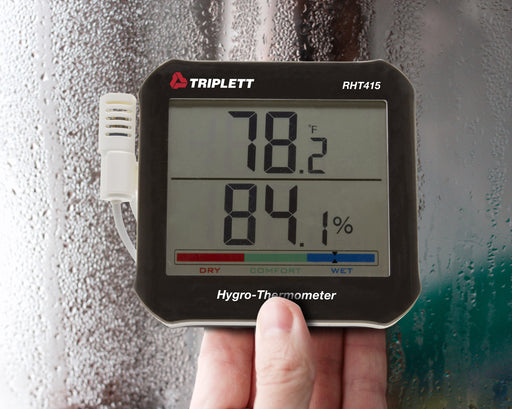
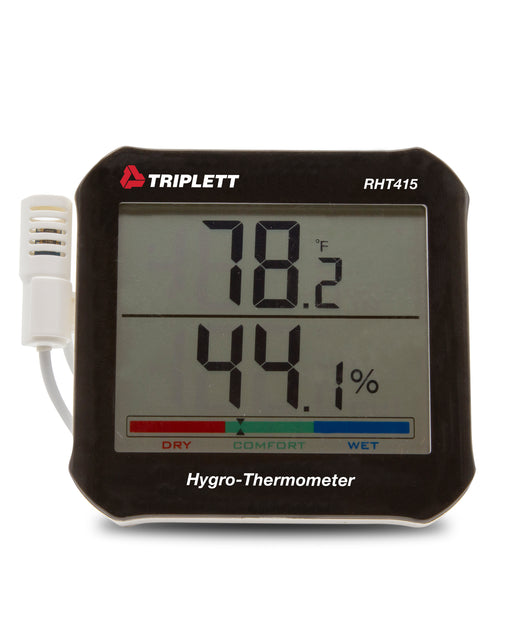
The Triplett Model RHT415 Hygro Thermometer with remote probe simultaneously displays Humidity (0 to 99%RH) and Temperature (14 to 140°/-10 to 60°C...
View full details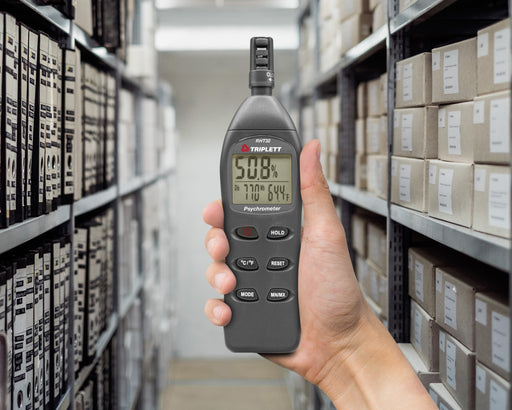
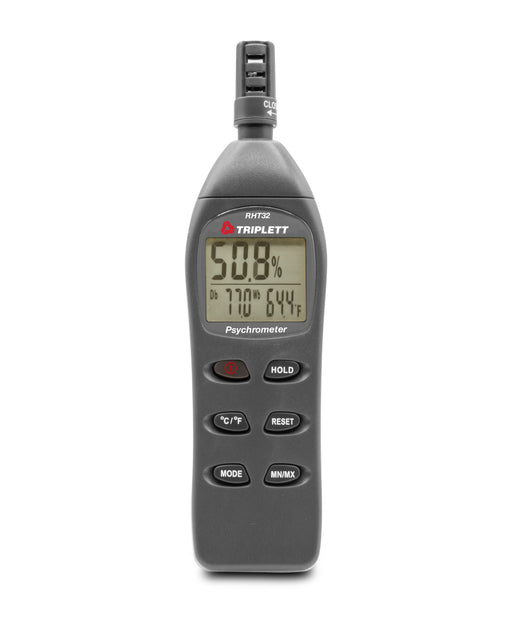
The Triplett Model RHT32 Hygro-Thermometer Psychrometer simultaneously displays Air Temperature, Humidity and Wet Bulb or Dew Point and is ideal fo...
View full details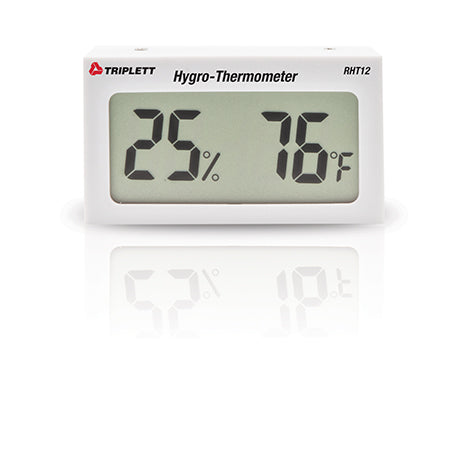
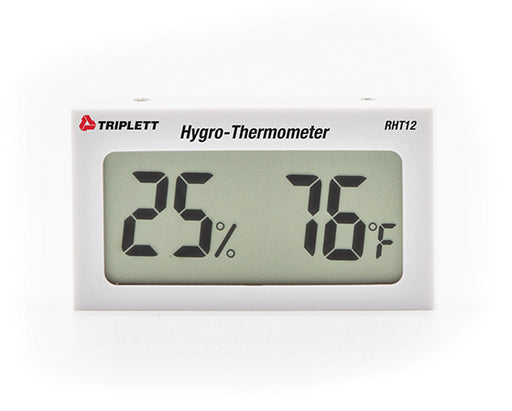
The Triplett Model RHT12 has a dual display for Humidity (10 to 99%RH) and Temperature (14 to 122°/-10 to 50°C) measurement in labs, green houses...
View full details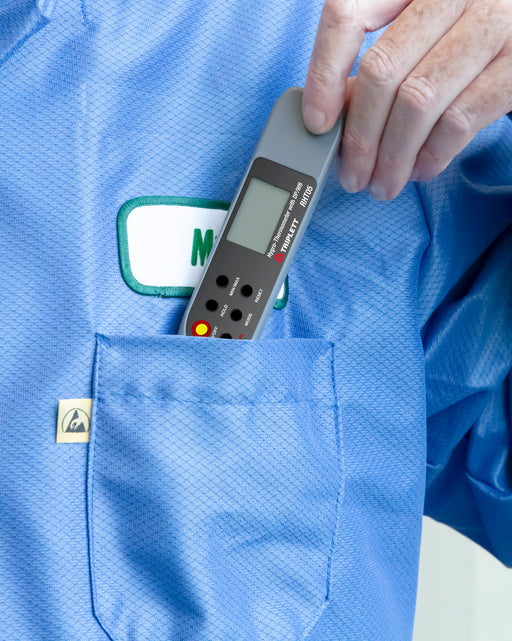
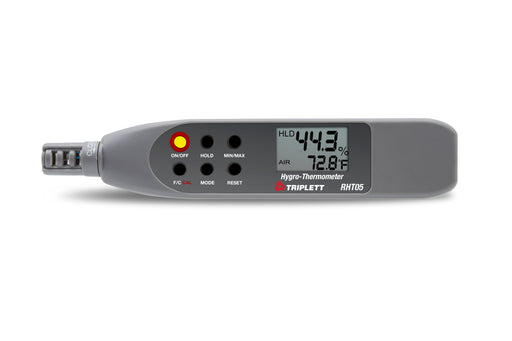
The Triplett Model RHT05 Hygro-Thermometer Pen measures Air Temperature, Relative Humidity, Wet Bulb, and Dew Point and is ideal for field applicat...
View full details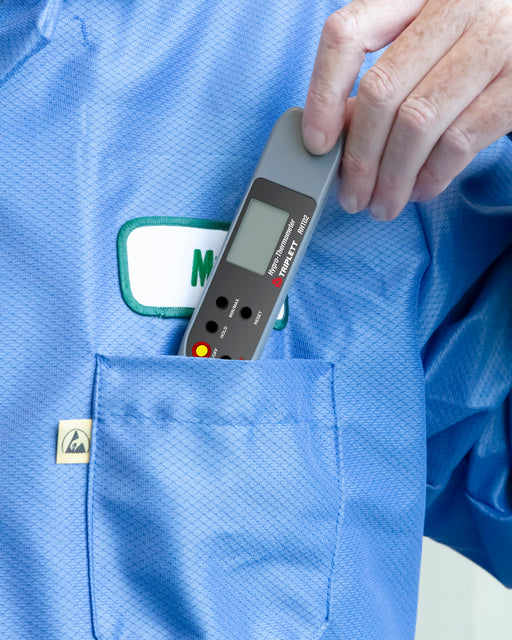
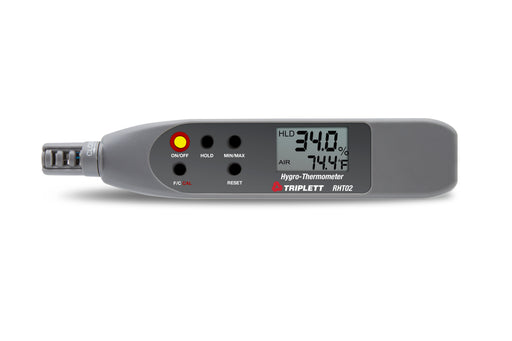
The Triplett Model RHT02 Hygro-Thermometer Pen simultaneously displays Humidity and Air Temperature and is ideal for field applications including b...
View full details
Know More About NIST Traceable Digital Hygro-Thermometers
NIST Traceable Digital Hygro-Thermometers provide accurate temperature and humidity measurements supported by documented calibration. They help professionals monitor environmental conditions where temperature and relative humidity can impact product quality, equipment performance, storage conditions, and operational processes.
These instruments are commonly used in laboratories, cleanrooms, healthcare facilities, warehouses, HVAC applications, and manufacturing environments where reliable environmental monitoring is required.
A Digital Hygro-Thermometer is considered NIST traceable when its calibration can be connected through documented comparisons to measurement standards recognized by the National Institute of Standards and Technology (NIST).
The calibration process verifies the instrument's measurement performance against reference standards. The results are recorded in calibration documentation, providing information about the instrument, calibration date, measurement results, and traceability details.
A NIST Traceable Digital Hygro-Thermometer measures both temperature and humidity, making it useful for monitoring indoor and controlled environments.
Depending on the model, it may measure:
These measurements help professionals maintain suitable environmental conditions for sensitive applications.
NIST Traceable Digital Hygro-Thermometers are used in industries where monitoring temperature and humidity is important.
Common applications include:
They help professionals verify conditions and maintain reliable measurement records.
The terms NIST Traceable Digital Hygro-Thermometer and NIST Certified Hygrometer are commonly used together, but they have different meanings.
NIST does not certify individual instruments. Instead, measuring devices are calibrated by qualified laboratories using standards traceable to NIST.
A NIST Traceable Digital Hygro-Thermometer measures both temperature and humidity with documented calibration, while a hygrometer typically focuses only on humidity measurement.
A NIST Traceable Digital Hygro-Thermometer provides greater confidence in environmental measurements through documented calibration and reliable performance.
Key benefits include:
These benefits make them suitable for professional environmental monitoring applications.
Calibration frequency depends on usage conditions, measurement requirements, operating environment, manufacturer recommendations, and organizational quality procedures.
Many organizations schedule annual calibration, while laboratories, cleanrooms, and critical environments may require more frequent verification.
Regular calibration helps maintain measurement accuracy and ensures dependable temperature and humidity monitoring.
When selecting a Digital Hygro-Thermometer, consider the application requirements and environmental conditions where the instrument will be used.
Important factors include:
Choosing the right instrument ensures accurate environmental monitoring and reliable long-term performance.